
'/%3e%3cdefs%3e%3clinearGradient%20id='prefix__paint0_linear_4737_37157'%20x1='3.018'%20y1='23.6'%20x2='44.925'%20y2='24.977'%20gradientUnits='userSpaceOnUse'%3e%3cstop%20stop-color='%231CB7FF'/%3e%3cstop%20offset='.502'%20stop-color='%232FF58B'/%3e%3c/linearGradient%3e%3c/defs%3e%3c/svg%3e)


Reports claim that Gianni Infantino is unsuccessfully trying to get Donald Trump to save his job: FIFA denies it
Aug 04 2026 16:49 · By SAM · 1 Reads


Infantino faces mounting pressure as FIFA rejects claims he turned to Trump for backing
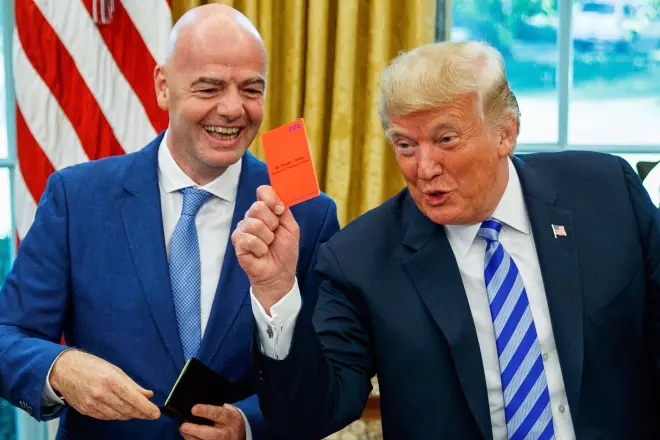
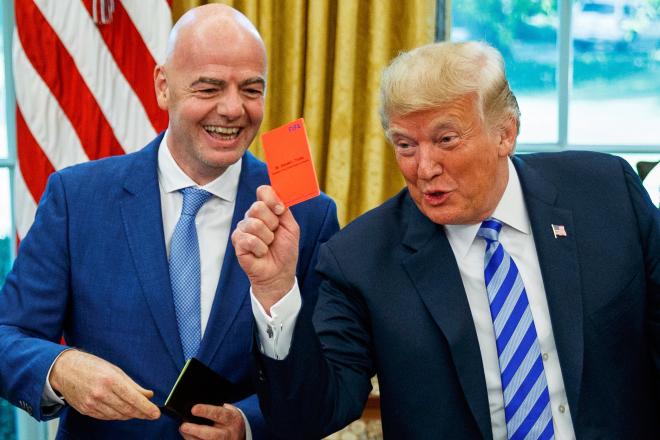
FIFA President Gianni Infantino has found himself at the center of fresh controversy after reports claimed he sought support from U.S. President Donald Trump’s administration as pressure mounted following the collapse of a controversial commercial rights proposal.
While the allegations have generated significant attention, FIFA has strongly denied them, insisting the claims are entirely untrue.
According to reports, Infantino attempted to reach Trump by phone after the proposed investment deal fell apart and also hoped to arrange private talks with U.S. Secretary of State Marco Rubio.
Anonymous sources suggested the FIFA president was looking for influential backing as criticism of his leadership intensified, with one source claiming he felt increasingly isolated amid widespread negative coverage.
However, the U.S. State Department rejected reports that a conversation with Rubio had been planned, stating there were no scheduled talks between the two.
The dispute comes after FIFA abandoned plans to create a separate company to oversee many of its commercial assets, including broadcasting, sponsorship, ticketing and licensing rights.
The proposal reportedly involved selling a minority stake worth more than $4 billion to private investors in an effort to unlock new funding for the organisation. However, the project quickly unraveled after football associations and senior FIFA figures objected to both the proposal itself and the way it had been handled.
Failed proposal sparks fresh questions over FIFA leadership
The collapse of the investment plan has intensified scrutiny of Infantino's leadership, particularly with attention beginning to shift toward FIFA's next presidential election cycle.
Reports have suggested dissatisfaction within the organisation has grown considerably, with some officials privately discussing the possibility of replacing the long-serving president after the failed initiative.
FIFA Chief Operating Officer Kevin Lamour publicly acknowledged that he had been unaware of the discussions surrounding the proposed restructuring, saying he felt deceived by how the process unfolded. The revelation added to concerns that key stakeholders were left out of major decisions involving one of world football's most valuable assets.
Opposition also emerged from Europe, where UEFA reacted strongly to the proposal. Its members unanimously supported a boycott of future FIFA competitions if the commercial restructuring had proceeded, highlighting the level of resistance among some of the sport's most influential governing bodies.
Such a move would have created unprecedented disruption for international football.
Despite the growing speculation, FIFA has categorically rejected claims that Infantino sought political assistance from the White House. In a statement issued to Reuters, the organization said its president had not contacted Trump or members of his administration in recent days, describing the reports as "pure fiction."
Infantino's close relationship with Trump has attracted additional attention because the investment proposal reportedly involved Thrive Capital, the private equity firm founded by Joshua Kushner, whose brother Jared Kushner is Trump's son-in-law.
Although that connection fueled further speculation, no evidence has emerged to support claims that political intervention was sought.
As debate over the failed proposal continues, Infantino has used social media to highlight public messages of support from several FIFA member federations, including those from Qatar, Morocco, Kuwait and Sri Lanka.
Whether those endorsements will be enough to ease growing concerns over his leadership remains uncertain, but the abandoned commercial plan has undoubtedly placed FIFA's governance and future direction under even greater scrutiny.